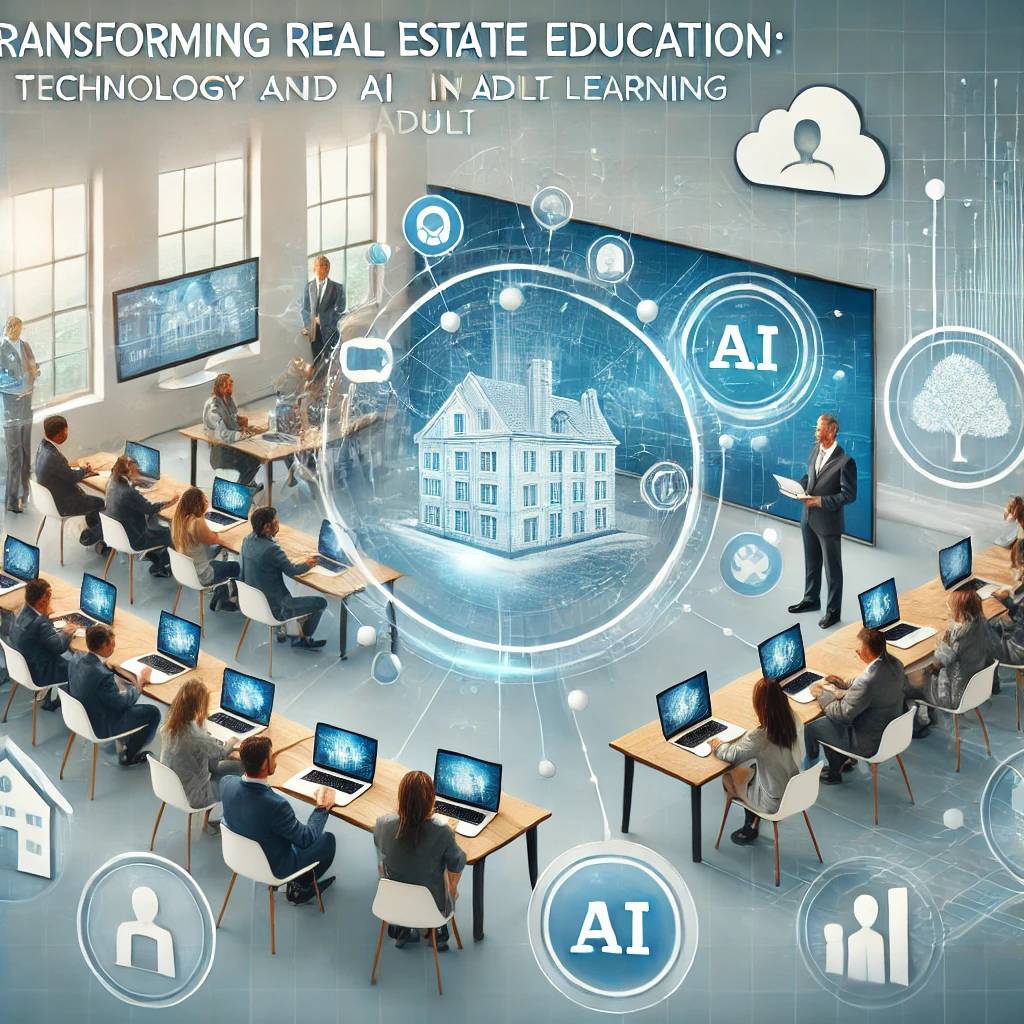
Post #2: Trends in Adult Education

Reflecting on the article “Empowering Learning: Leveraging Technology in Adult Education” by ABC Life Literacy Canada (2020), it’s clear that technology has become a cornerstone of modern education, offering unparalleled flexibility and accessibility. This shift is particularly impactful in British Columbia’s real estate sector, where professionals must continuously adapt to a dynamic industry.
Technology’s Role in Real Estate Education
The adoption of self-paced online courses and virtual classrooms, particularly on platforms like Zoom, has become the norm. This transition allows real estate professionals to engage in continuous learning without the constraints of physical attendance. By providing flexibility, digital learning solutions align with the fast-paced nature of the industry.
Digital platforms enable learners to access educational materials from anywhere, accommodating diverse schedules and locations. These tools also foster connections between learners and educators, encouraging collaboration and mutual support. Integrating technology into education equips professionals with digital skills essential for thriving in today’s workforce.
Challenges in a Virtual Environment
Despite its many benefits, online education presents challenges. The absence of in-person classes has reduced opportunities for spontaneous discussions and networking—activities critical for exchanging ideas and fostering professional growth. In virtual settings, participation can be harder to monitor, especially in breakout rooms, where learners may feel hesitant to contribute. This often leads to less dynamic interactions compared to traditional classroom environments.
To address these limitations, Merriam and Bierema (2013) emphasize that “learning is a social activity, and interaction with others enhances the learning experience” (p. 132). They recommend incorporating collaborative activities that actively engage learners (p. 135). Strategies like dynamic grouping in breakout rooms and actively facilitated discussions can create a more interactive and inclusive learning environment.
The Impact of AI in Education
Artificial intelligence (AI) is further transforming how real estate professionals learn. AI-powered platforms offer personalized learning experiences, tailoring content to an individual’s needs and progress. For instance:
- AI tools can analyze a learner’s performance in real-time, identifying strengths and areas for improvement to provide customized feedback.
- Realtors can use AI-driven platforms to access context-specific answers to their questions, enabling more informed discussions with instructors.
This immediacy empowers learners to take control of their education while fostering engagement and critical thinking.
However, thoughtful implementation of AI is essential. Potential challenges, such as algorithmic bias and the need for digital literacy, must be addressed to ensure equitable access and effective usage.
Practical Resources
For those interested in the transformative potential of AI in education, Sal Khan’s TED Talk, “How AI Could Save (Not Destroy) Education,” explores how AI can revolutionize learning by offering personalized tutoring and supporting educators. The insights he provides highlight the opportunities AI creates for a more accessible and effective educational landscape.
Final Thoughts
As the real estate industry continues to evolve, embracing technology and AI is critical to staying competitive. By integrating these tools thoughtfully, real estate professionals can enhance their learning experiences, develop essential skills, and better serve their clients in an ever-changing market.
References
- ABC Life Literacy Canada. (2020). Empowering Learning: Leveraging Technology in Adult Education. Retrieved from https://abclifeliteracy.ca
- Merriam, S. B., & Bierema, L. L. (2013). Adult Learning: Linking Theory and Practice. Jossey-Bass.
- Khan, S. (2020). How AI Could Save (Not Destroy) Education. Retrieved from TED.com

This work is licensed under a Creative Commons Attribution-NonCommercial-ShareAlike 4.0 International License.



Leave a Reply